A Simplified Variant of Chess for which a Short Program Computes a Non-trivial Upper Bound for the Number of Reachable Positions Obtained from 65141475298198504104226577310812726424036 Naturally Defined Initial Configurations of Pieces
Apoloniusz Tyszka *
Faculty of Production and Power Engineering, University of Agriculture, Balicka 116B, 30-149 Kraków, Poland.
*Author to whom correspondence should be addressed.
Abstract
We simplify the rules of chess. We assume that the initial configuration of pieces is not fixed and satisfies some general conditions. Let I denote the set of all these configurations. By our assumptions, for every C \(\in\) I, after 0 or more moves, the configuration obtained from C and the information who has a move determine the set of all ways of continuing the game i.e. the reachable position. For C \(\in\) I, let R(C) denote the set of all reachable positions obtained from C. A short program shows that card (I) = 65141475298198504104226577310812726424036 and card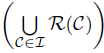 < 42959232120882551923988994948073848799479217319544.
Keywords: Chess in which there are 65141475298198504104226577310812726424036 naturally defined initial configurations of pieces;, chess with simplified rules, upper bound for the number of reachable positions.